A special project created with the support of the Jewish news portal · We sincerely love Azerbaijan — our Homeland, its people, culture, history and unique diversity.
Absheron
RUAZENHE
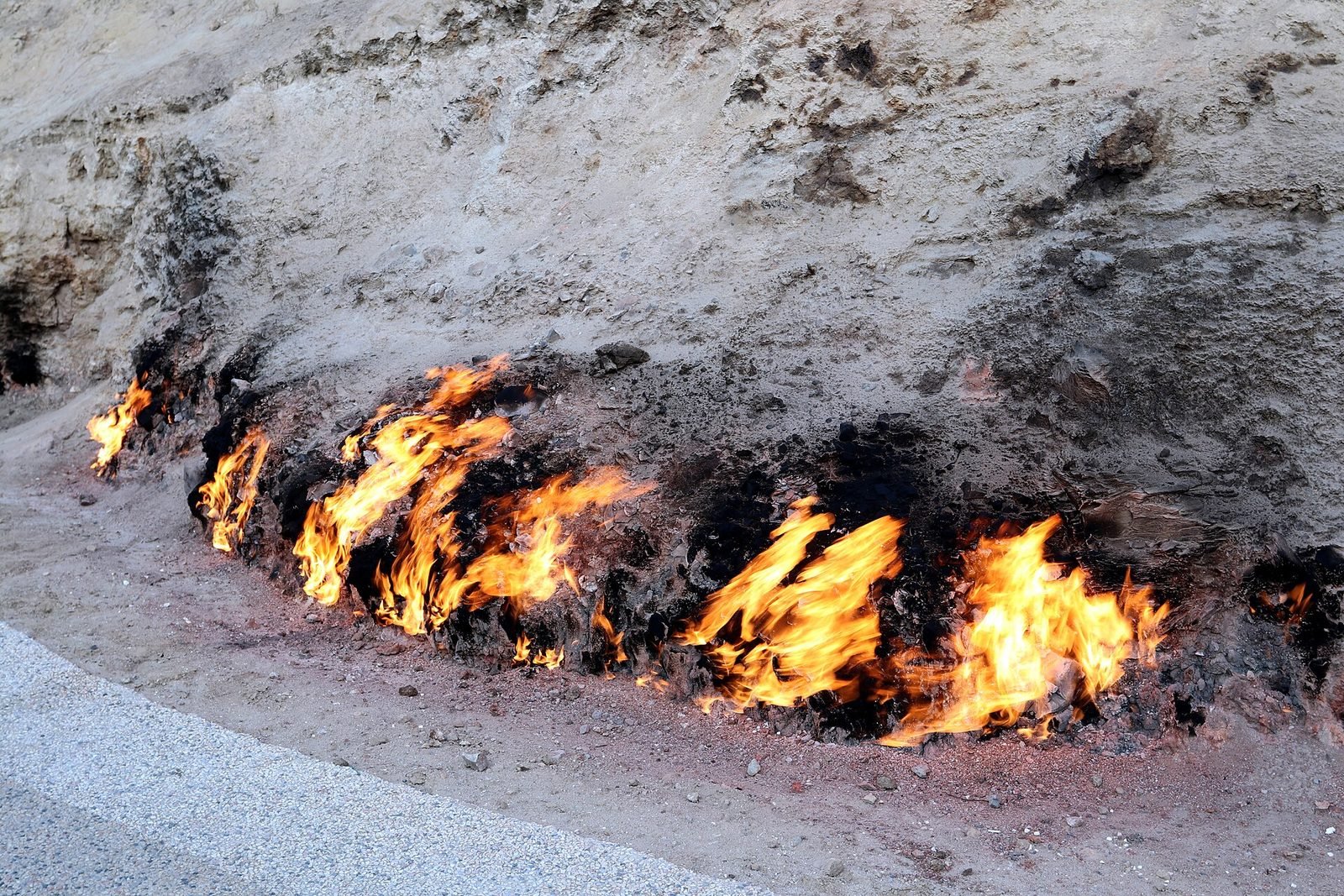
Вечный огонь Янар-Даг на Апшеронском полуострове
Azerbaijan · near BakuLand of wind and fire

AbsheronThe peninsula that cuts into the Caspian — home of eternal flame and Baku oil

Here the earth burns by itself, the wind never rests, and oil has gushed from the depths for centuries. Absheron is the most famous peninsula of the Caspian and the heart of Azerbaijan.

Scroll

About the peninsula

A peninsula where fire comes straight out of the ground.

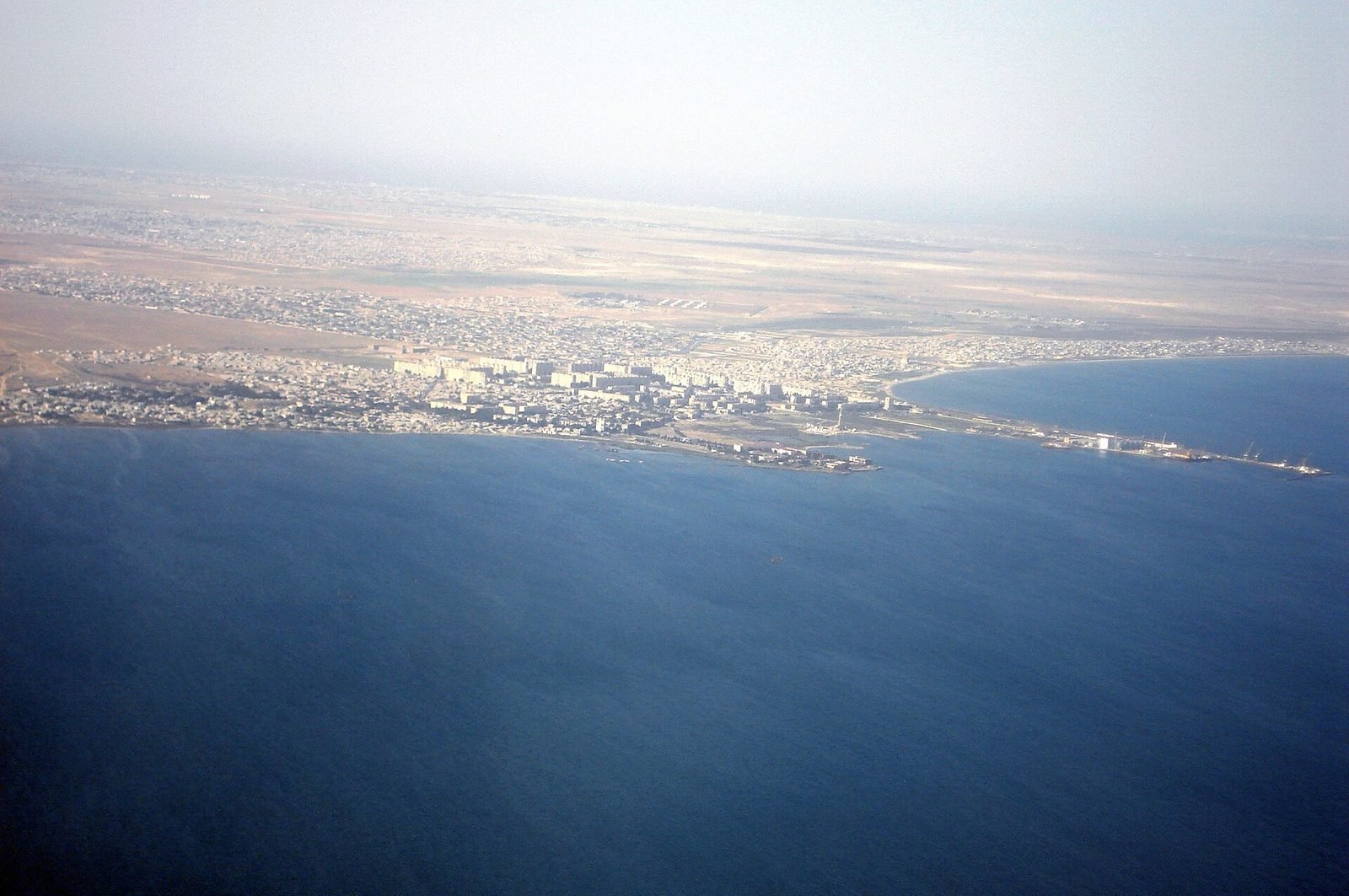
The Absheron Peninsula is the largest peninsula of the Caspian Sea. It stretches almost 60 kilometres eastward toward the sea, where the Greater Caucasus meets the Caspian. It is the “nose” of Azerbaijan, turned to the water.

Baku — the country’s capital and the largest city of the Caucasus — stands on the peninsula. Around it lie dozens of old villages, dachas, vineyards, fig orchards, salt lakes and oil fields, forming the unmistakable Absheron landscape.

It is a land of the elements. Winds blow over it almost constantly, its depths hold vast reserves of oil and gas, and in places the gas reaches the surface and burns by itself. It is because of these eternal fires that Azerbaijan is called the “Land of Fire”.

And yet Absheron has been inhabited for thousands of years: medieval castles, mosques, baths, the underground cisterns called ovdans and stone villages keep the memory of many eras. Here antiquity and the oil industry stand side by side at every step.

In brief

The peninsula in a few traits

≈ 60 kmjuts into the Caspian Sea
Yanar Dagan eternal natural flame
~1900about half the world’s oil
Bakuthe capital stands on the peninsula

Timeline

Absheron through time

From ancient fire-worshippers to offshore oil fields — a short timeline of the peninsula.
Antiquity
The eternal fires of Absheron draw travellers and fire-worshippers; the land by the Caspian becomes sacred.
Middle Ages
Keep-castles are built across the peninsula — at Mardakan, Ramana and Nardaran — to protect the villages from raids.
17th–18th c.
The Ateshgah fire temple at Surakhani becomes a place of pilgrimage for Zoroastrians, Hindus and Sikhs.
1846
At Bibi-Heybat near Baku one of the world’s first oil wells is drilled — long before the American one.
around 1900
Baku and Absheron produce roughly half of all the oil extracted in the world; the peninsula is covered with derricks.
1949
In the open Caspian the Oil Rocks are founded — a whole city of oil workers on stilts.
Today
Absheron is oil and gas, dachas and beaches, ancient castles and the Absheron National Park.
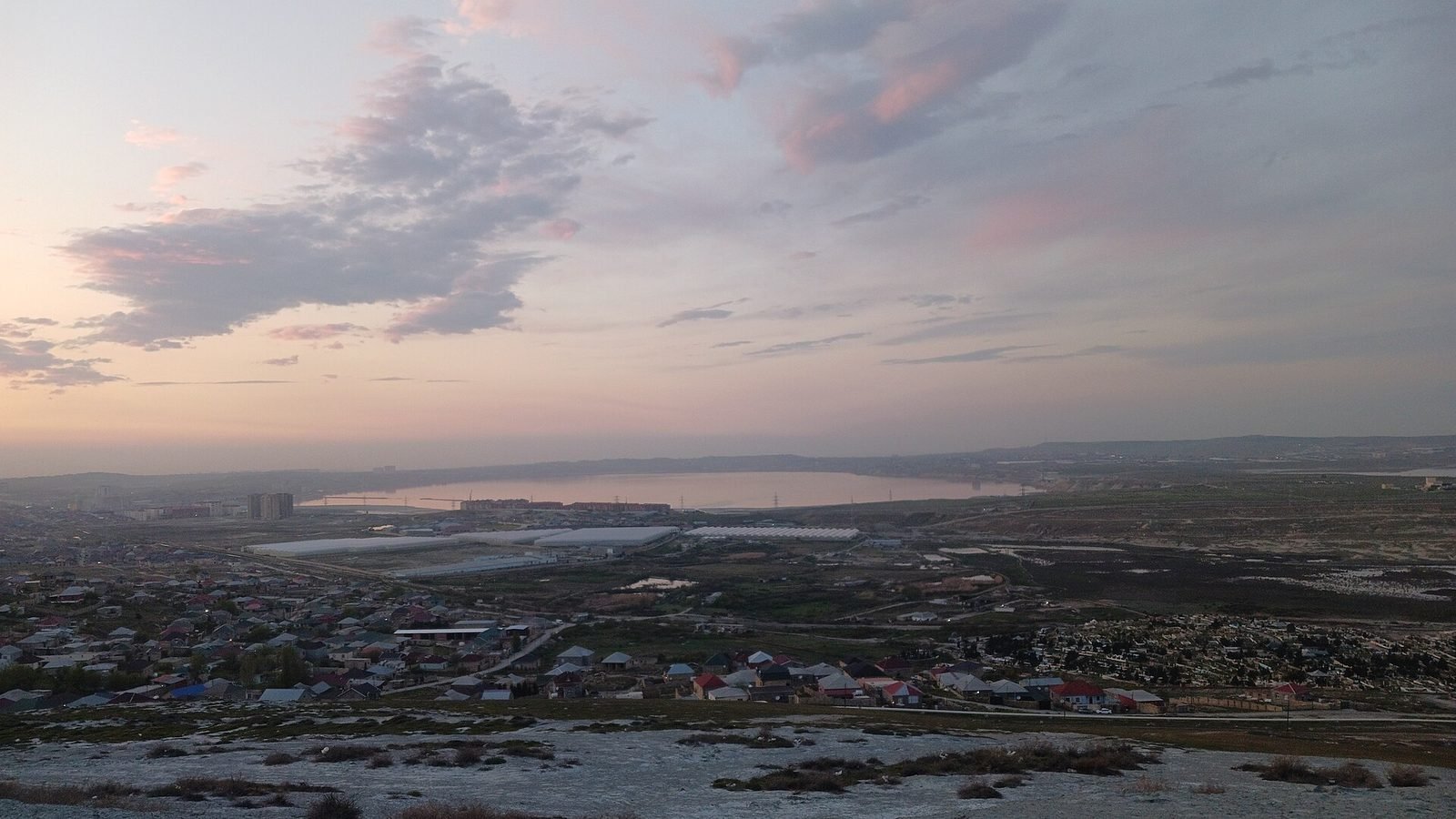
Озеро Масазыр на АпшеронеLand and sea

Nature

Wind, salt and the Caspian

Absheron is steppe and semi-desert, open to the sea on three sides. Strong winds blow here — the northern khazri and the southern gilavar — and salt lakes glisten in the hollows, one of which, Masazir, is coloured pink.

Despite its dryness, the peninsula is generous: Absheron figs, grapes, olives and rare saffron have long been famous across Azerbaijan.
Nature of Absheron →

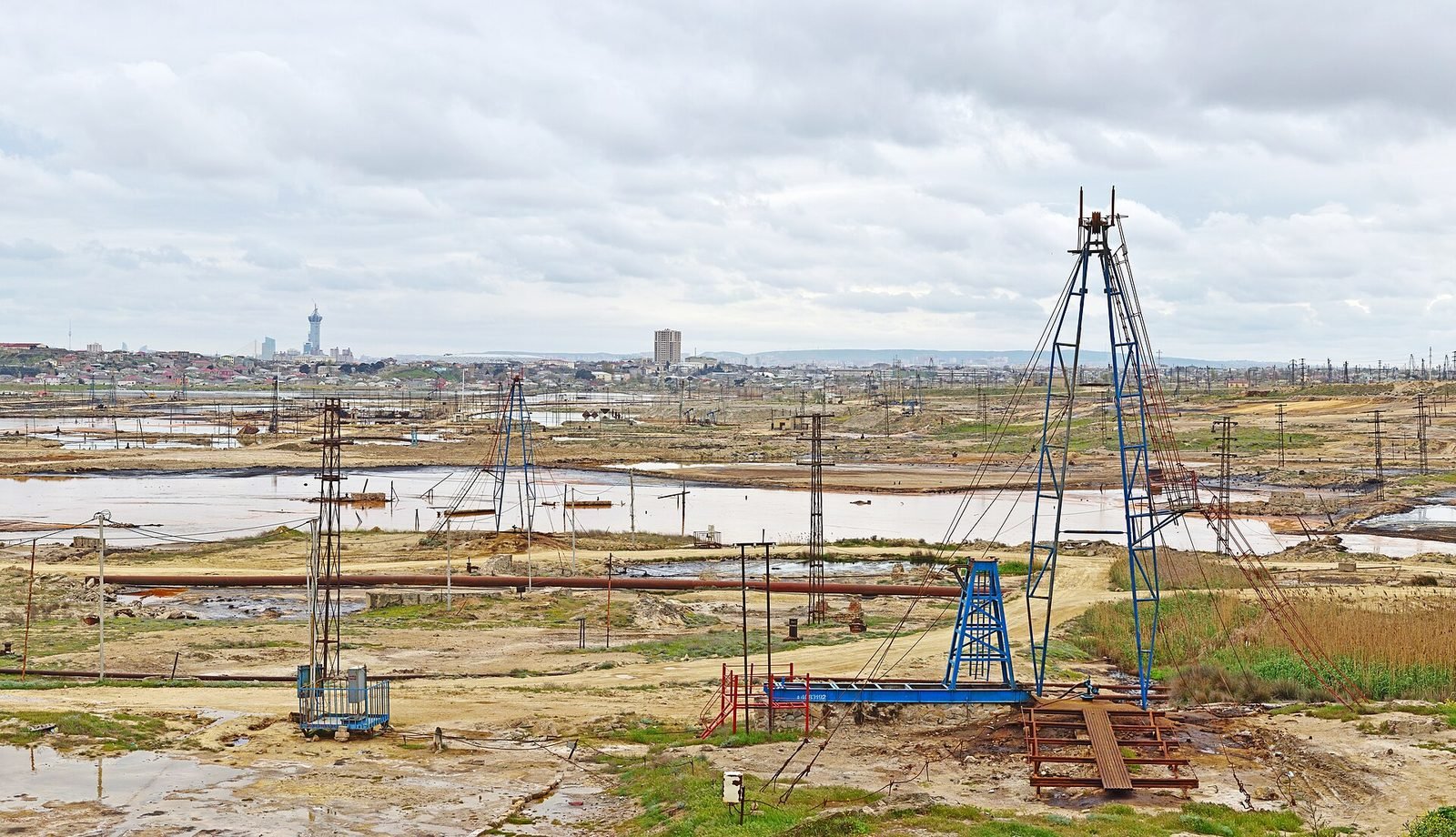
Нефтепромыслы АпшеронаOil fields

Fire & oil

Where the earth itself burns

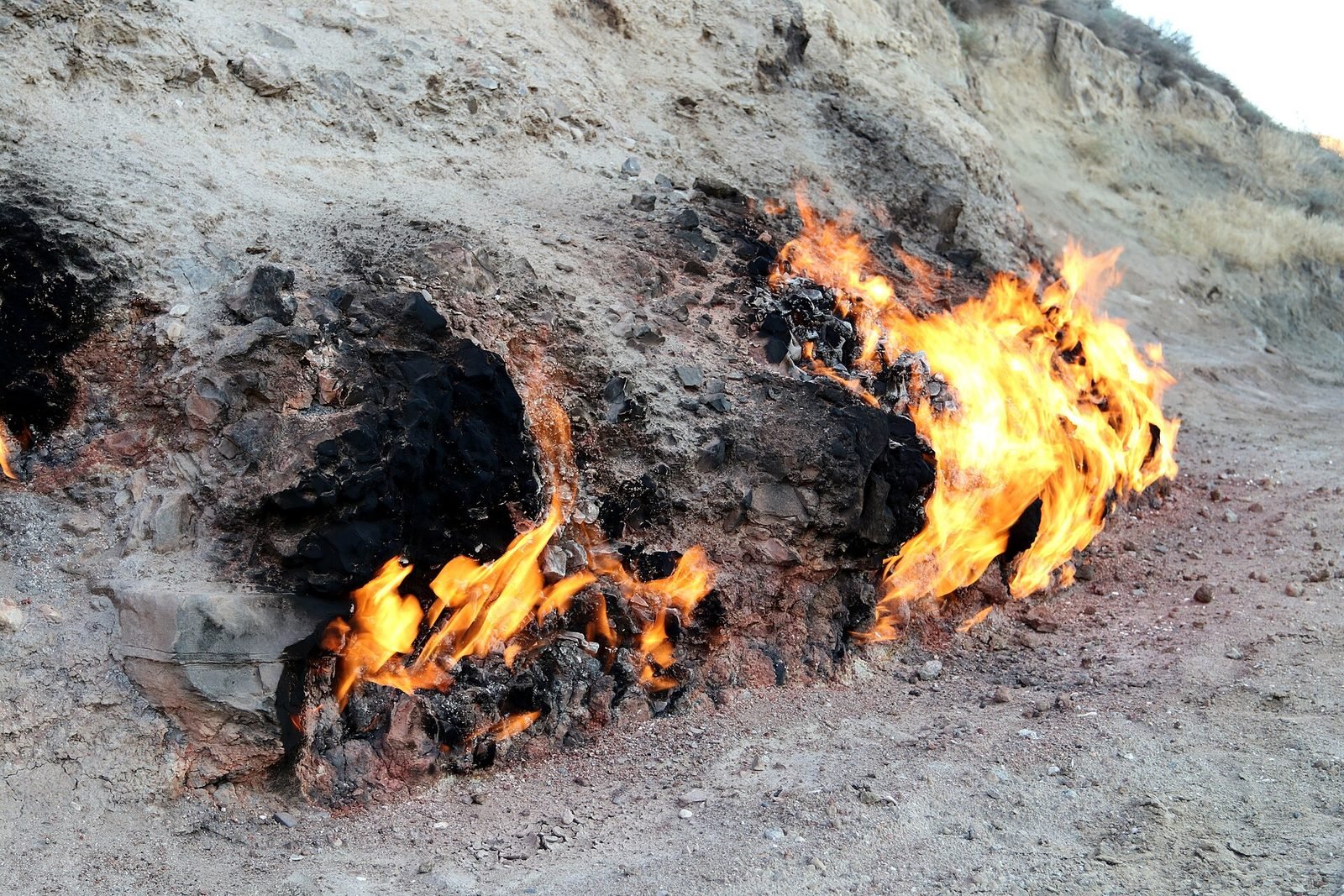
Absheron has been known for natural fire for centuries: gas escapes to the surface and burns tirelessly — as at Yanar Dag and the Ateshgah temple. The same gas and oil made Baku a centre of world oil history in the 19th–20th centuries.

The peninsula is still covered with oil derricks, and out in the open sea stands the legendary oil workers’ town — the Oil Rocks.
Fire & oil →

“Here the fire is not lit — it burns by itself, for thousands of years.”

Yanar Dag · The burning mountain
Раманинская крепость на АпшеронеCastles

Heritage

Towers in the wind

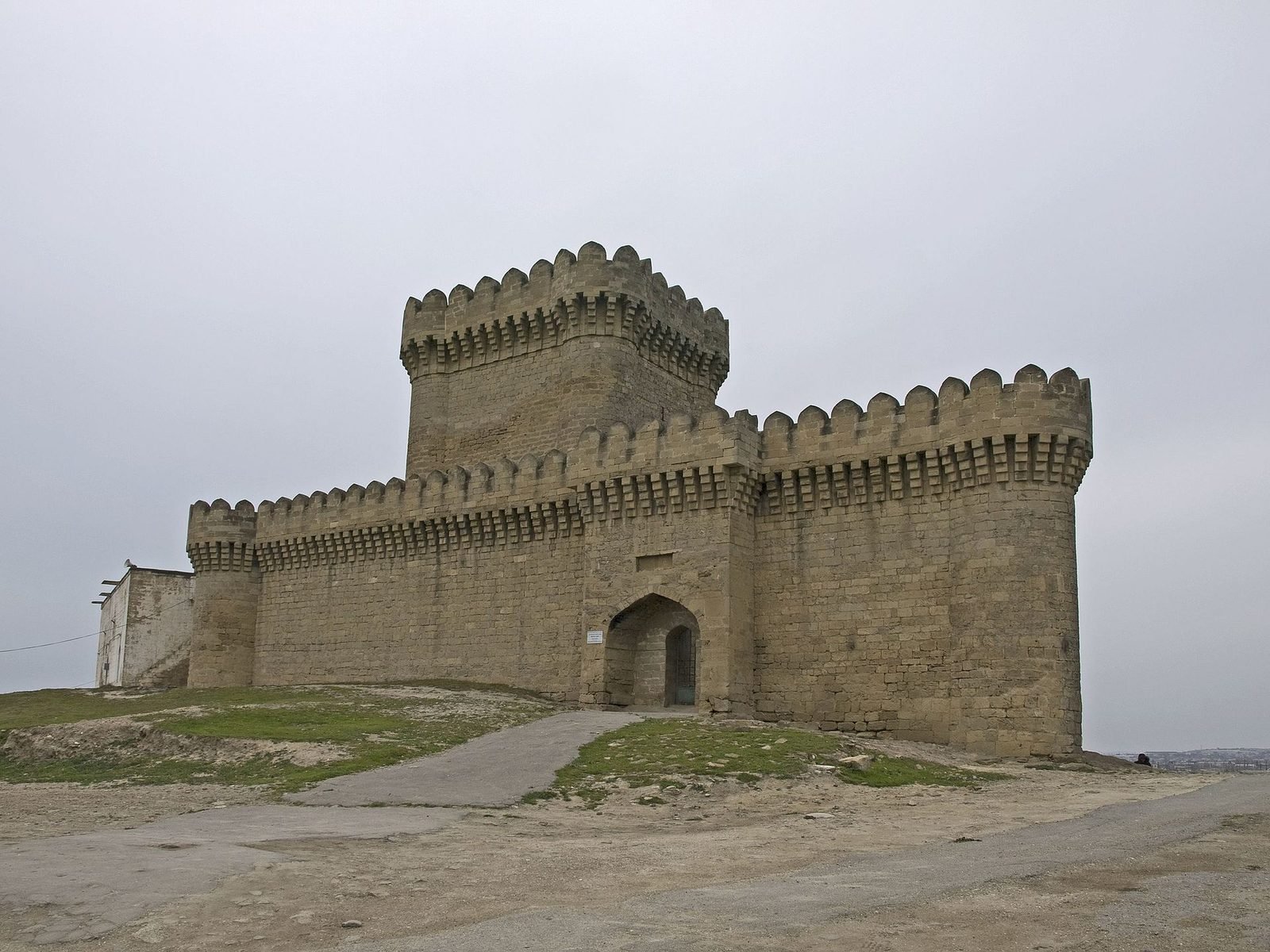
Medieval keep-castles stand all across Absheron: at Mardakan (round and rectangular), at Ramana, at Nardaran. They guarded the villages against raids and served as refuges for the people.

Beside them are old mosques, baths and the underground cisterns called ovdans; whole villages have kept the Absheron stone look.
Heritage of Absheron →

Каспийский пляж АпшеронаCaspian

Today

Dachas, beaches and a park

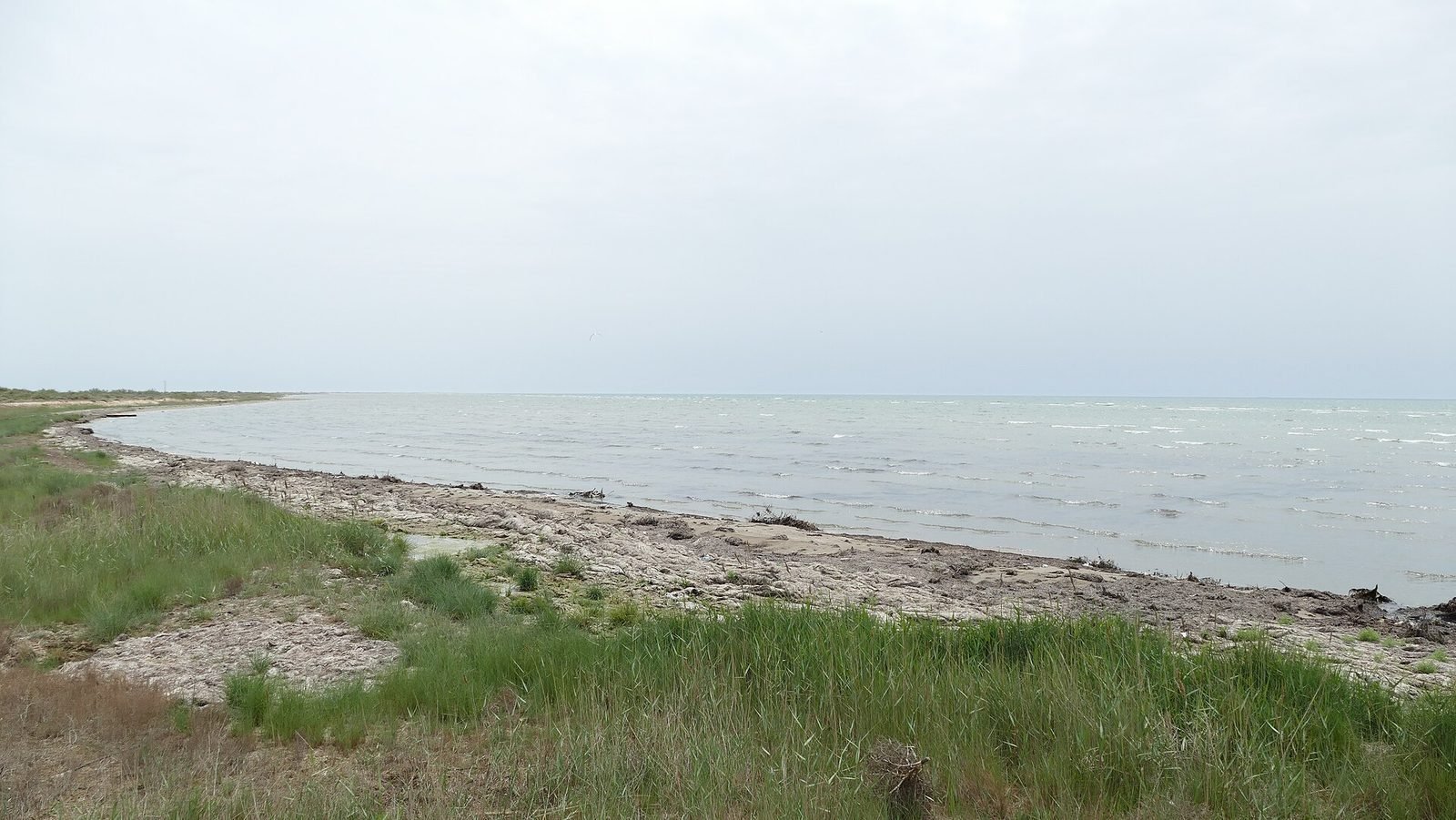
Today Absheron is the suburbs of Baku, the dacha villages of Buzovna, Mardakan and Shuvelan, seaside resorts and the Absheron National Park at the very tip of the peninsula.

For the people of Baku, Absheron is a place for summer rest by the sea, figs from one’s own tree and an escape from the city bustle.

Absheron today →

Questions & answers

Absheron in brief

What is the Absheron Peninsula?
The Absheron Peninsula is the largest peninsula of the Caspian Sea, in eastern Azerbaijan. It stretches about 60 km into the sea; Baku — the country’s capital and the largest city of the Caucasus — stands upon it.
Why is Absheron called a land of fire?
Natural gas escapes from beneath Absheron and in places burns by itself for centuries — hence the eternal flame of Yanar Dag and the Ateshgah temple. This is why Azerbaijan is called the “Land of Fire” (Odlar Yurdu).
What is Yanar Dag?
Yanar Dag (“burning mountain”) is a slope near Baku where flames of burning natural gas constantly burst from the earth. The fire never goes out — not by day, by night or in the rain. It is one of Absheron’s main natural sights.
What are the Oil Rocks?
The Oil Rocks (Neft Daşları) is an oil workers’ settlement out in the open Caspian Sea, built on trestles and stilts and founded in 1949. It is one of the oldest offshore oil fields in the world, with roads, houses and even greenery right above the water.
What castles are there on Absheron?
Absheron preserves medieval keep-castles: the Mardakan castles (a round and a rectangular tower of the 13th–14th centuries), the Ramana castle, the Nardaran castle and others, as well as old mosques and the underground cisterns called ovdans.
What is there to see on the peninsula?
Worth seeing are the eternal flame of Yanar Dag, the Ateshgah fire temple, the castles of Mardakan and Ramana, the Oil Rocks, the pink lake of Masazir, the Caspian beaches and the Absheron National Park at Cape Shah.